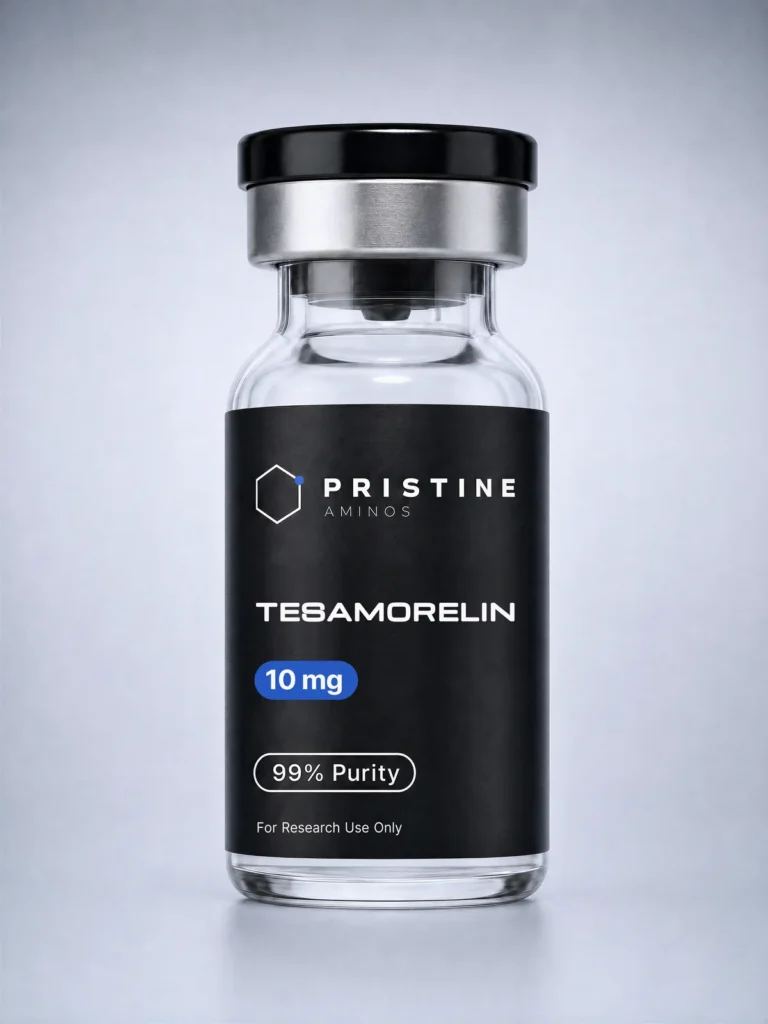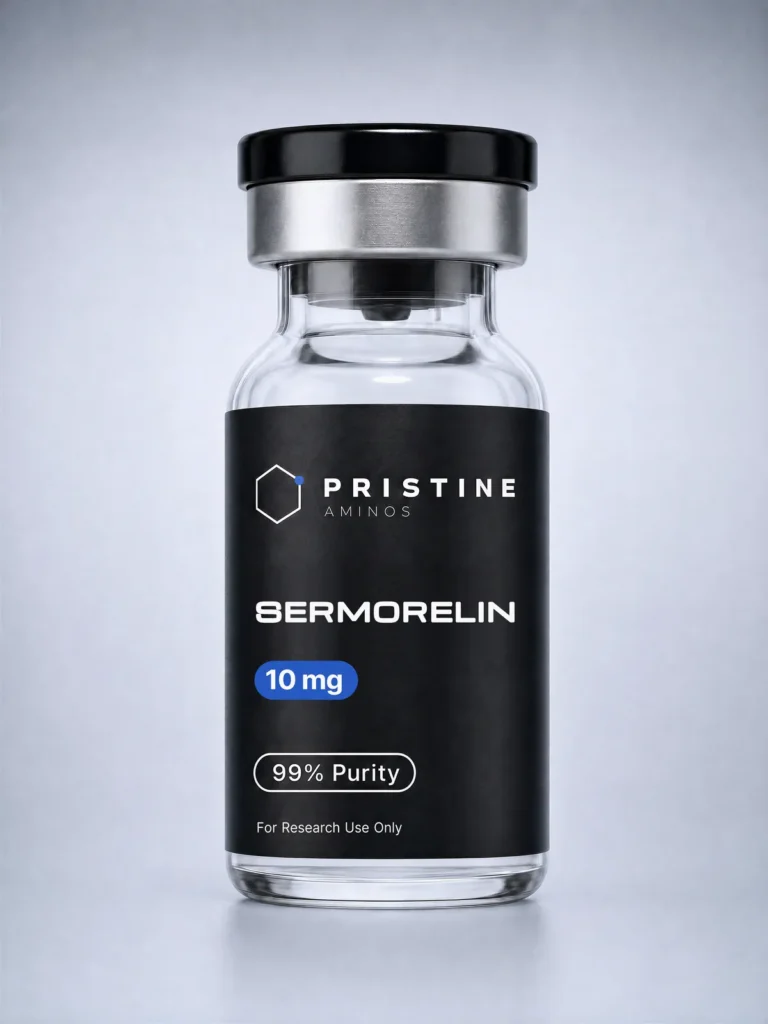


Tesamorelin and sermorelin share a receptor target, but they aren’t the same molecule. In a tesamorelin vs. sermorelin comparison, the key differences are chain length, chemical modification, and the research questions each can help address.
For laboratory work, start with molecular identity and the assay you plan to run. Then check whether the documentation supports your study design.
What Tesamorelin and Sermorelin Are: Molecular Features
Both peptides are synthetic analogs of growth hormone-releasing hormone, or GHRH. They’re studied for activity at the GHRH receptor, but their structures differ in a way that affects identity checks and stability.
Sermorelin is an amidated synthetic 29-amino-acid peptide, GHRH(1-29)-amide, matching the amino-terminal segment of the native 44-amino-acid human sequence. Tesamorelin is the full hGRF(1-44)-amide sequence with a trans-3-hexenoyl group added to Tyr1 at the N-terminus. That added group helps distinguish tesamorelin from the unmodified sequence.
| Feature | Tesamorelin | Sermorelin |
|---|---|---|
| Sequence | Full GHRH(1-44)-amide | GHRH(1-29)-amide fragment |
| Length | 44 amino acids | 29 amino acids |
| N-terminal modification | trans-3-hexenoyl group on Tyr1 | None |
| Reported DPP-IV resistance | Yes, in non-clinical work | Not designed for it |
| Receptor studied | GHRH receptor | GHRH receptor |
Those structural details matter when you select a reference material or assess a certificate of analysis. The neuroendocrine peptide selection groups compounds within this research area, and the tesamorelin compound sheet and sermorelin compound sheet summarize each molecule. The study itself should define which sequence and modification you need.
Keep the identity question narrow: does the material match the named sequence and modification? A certificate for one compound cannot verify the other.
How Their Growth Hormone-Related Mechanisms Are Studied
Both compounds are studied as GHRH receptor agonists. In laboratory models, receptor binding can activate a G-protein signaling pathway that raises intracellular cyclic AMP. Researchers can measure that signal directly, then assess downstream markers such as growth hormone-related signaling or IGF-1 in the model being used.
The shared receptor target doesn’t make the peptides interchangeable. Sermorelin is a shorter GHRH fragment, while tesamorelin retains the full sequence with an added chemical cap. That difference can affect ligand stability during an assay and the time window in which receptor activity is measured.
For example, a cell-based assay focused on receptor activation might compare response curves under matched conditions. A separate stability experiment could track intact peptide over time in a defined matrix. Keeping those questions separate helps distinguish a change in receptor response from a change in how much intact compound remains.
Signal timing also matters. GHRH activity is part of a regulated pathway, and the pattern of receptor stimulation can shape what a model shows. Researchers should state their cell system, exposure conditions, measurement window, and readout in the study record. Don’t assume that results from one setup transfer directly to another.
GHRH receptor studies also differ from work on the ghrelin receptor. These are separate receptor systems, so a compound that acts on one is not a direct substitute for a probe aimed at the other. The article on GHRH analogs vs. ghrelin receptor agonists covers that distinction, and the ipamorelin vs. tesamorelin comparison shows it with a specific pair. Pristine Aminos’ research peptide catalog is intended for laboratory research use; select material only after defining the receptor and assay question.
In short, the useful comparison is about structure and experimental fit, not a universal ranking. The same endpoint and matched conditions are needed before results can be meaningfully compared.
Pharmacokinetics, Evidence, and Regulatory Context
Both peptides are broken down over time. Tesamorelin’s N-terminal cap was developed to resist dipeptidyl aminopeptidase-IV deactivation, and in a non-clinical evaluation the modification slowed in vitro degradation in plasma compared with the unmodified GHRH(1-44)-amide. Sermorelin lacks that cap, so the molecules have different design features even though both act through the GHRH receptor.
Pharmacokinetic results depend on the test system, sample matrix, and measurement method. A value from one study should not be treated as a fixed property across every laboratory condition. For a useful comparison, record the matrix and time points, then measure intact peptide with a method suited to the question.
The evidence bases also differ. Study design and the material tested determine what a finding can support. Regulatory history does not grant approval to research-grade material or a separate supplier’s lot.
The distinction is simple but important: approval applies to a defined finished product under a specific application. It does not automatically apply to a research peptide with a matching name or sequence. A study record should be read in its own context rather than treated as evidence for every material or model.
For lab sourcing, the relevant question is whether the documentation identifies the material and supports the assay you plan to run. Pristine Aminos states that its research-use-only products are made in the USA, ship from California, are third-party tested, and have a Certificate of Analysis for every product.
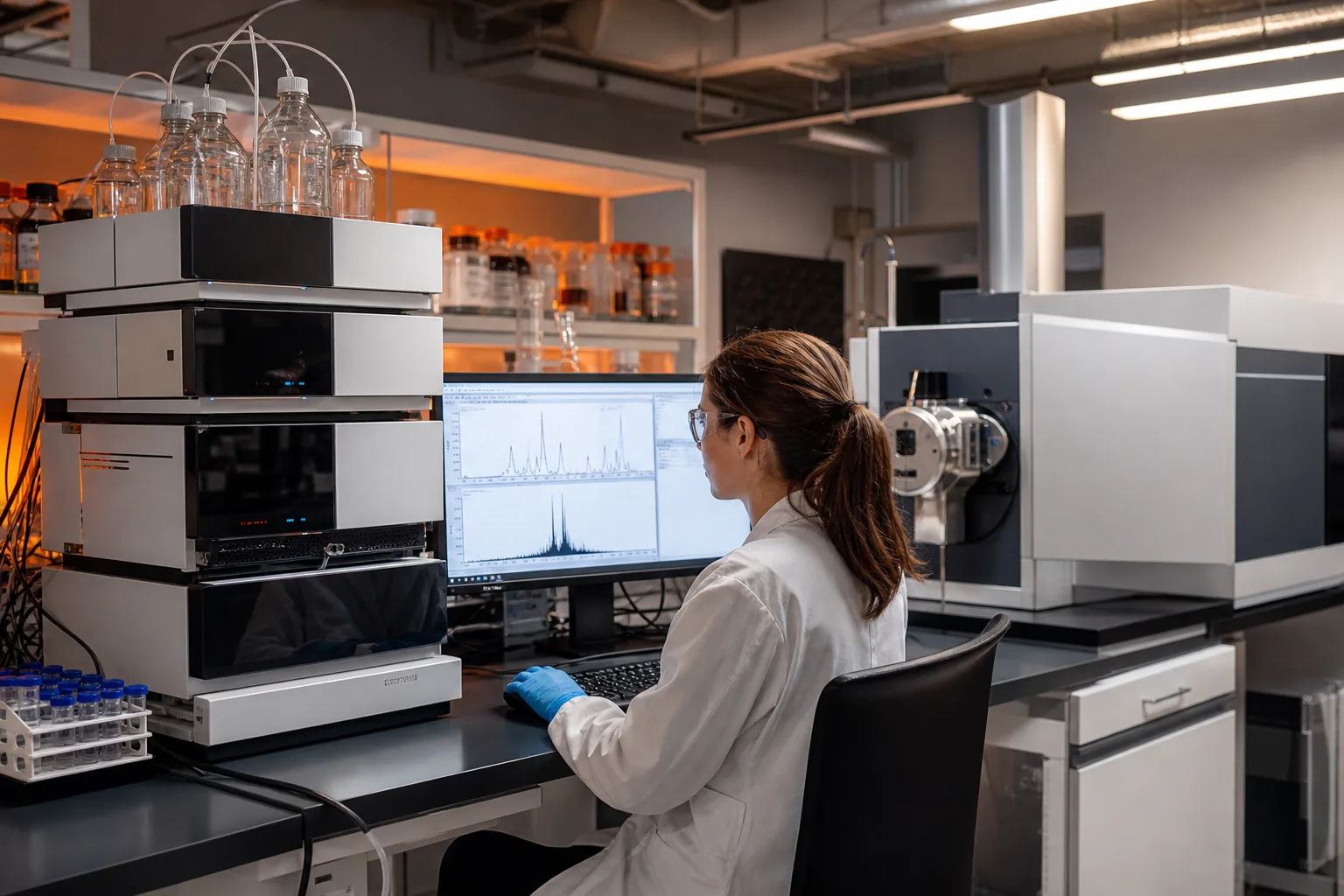
Mass spectrometry can support identity by comparing measured mass with the expected molecular mass. RP-HPLC is a separation method used to estimate purity. These methods answer different questions. A purity percentage alone doesn’t confirm that the main peak is the intended peptide.
Study context matters when interpreting research findings. For your own work, note the exact assay conditions and the evidence type behind any claim you rely on.
Choosing a Peptide for a Laboratory Question and Evaluating Documentation
Choose the compound that matches the question, not the one with the more familiar name. If the study needs the full, modified GHRH sequence, tesamorelin is the structural match. If it needs the shorter GHRH(1-29) fragment, sermorelin is the match.
Before using a lot, check that the COA identifies the same compound and batch as the material in hand. Confirm that the expected mass matches the compound. Then review the chromatogram and the stated HPLC method, where provided, rather than relying on a purity figure by itself.
Traceability matters during a handoff between procurement and the bench. Save the lot identifier with the COA and study notes. If the material is used in a later repeat, compare the lot and analytical record before treating the result as a direct replication.
Pristine Aminos provides a COA for every product, including tesamorelin and sermorelin. Check the record and match it to your research question before procurement. The products are for laboratory research only, not for human or veterinary use.
Ask whether the document is batch-specific, which analytical methods it reports, and whether its identity result fits the named peptide. If a field matters to your experiment, resolve it before the material enters the workflow. Anyone can claim purity. A lot-linked document gives you something specific to assess.
Frequently Asked Questions
What is the main difference between tesamorelin and sermorelin?
Tesamorelin has the full 44-amino-acid GHRH sequence plus an N-terminal chemical modification, while sermorelin is the first 29 amino acids of GHRH. The added group gives tesamorelin a distinct expected molecular mass and was designed to slow enzymatic breakdown. Both are studied at the GHRH receptor, but their structures are not interchangeable.
Do tesamorelin and sermorelin act on the same receptor?
Yes, both are studied as agonists of the GHRH receptor. That shared target doesn’t mean the peptides will produce identical assay results. Their sequence length and chemical structure differ, and stability can affect the amount of intact peptide present during an experiment. Define the model and readout before comparing receptor activity.
Does regulatory approval apply to research-grade tesamorelin or sermorelin?
No. Approval applies to a specific finished product under a particular application, not automatically to research-grade material with the same compound name. Neither compound’s regulatory history establishes the status or quality of a separate research lot.
What should a peptide COA include for laboratory research?
A useful COA should identify the compound and lot, then show analytical results that help assess identity and purity. Mass spectrometry supports a molecular-mass check, while HPLC can show separation and a purity estimate. Review the method details and the actual record for your batch. A general product claim isn’t a substitute for lot-specific documentation.
Conclusion
For this comparison, select by sequence and assay purpose, then confirm the material’s identity and documentation before work begins. If you’re evaluating Pristine Aminos research materials, review the COA for the product you’re considering. All materials are for laboratory research only, not for human or veterinary use.