Reconstitution is the process of dissolving a lyophilized peptide back into a liquid for use in research. The most common diluent is bacteriostatic water — sterile water containing a small amount of benzyl alcohol that inhibits bacterial growth, allowing a prepared solution to be stored longer than with plain sterile water.
The general approach is to add the diluent slowly down the side of the vial rather than directly onto the powder, and to let the peptide dissolve on its own rather than shaking vigorously, which can damage delicate sequences. The volume of diluent you add determines the concentration of the resulting solution.
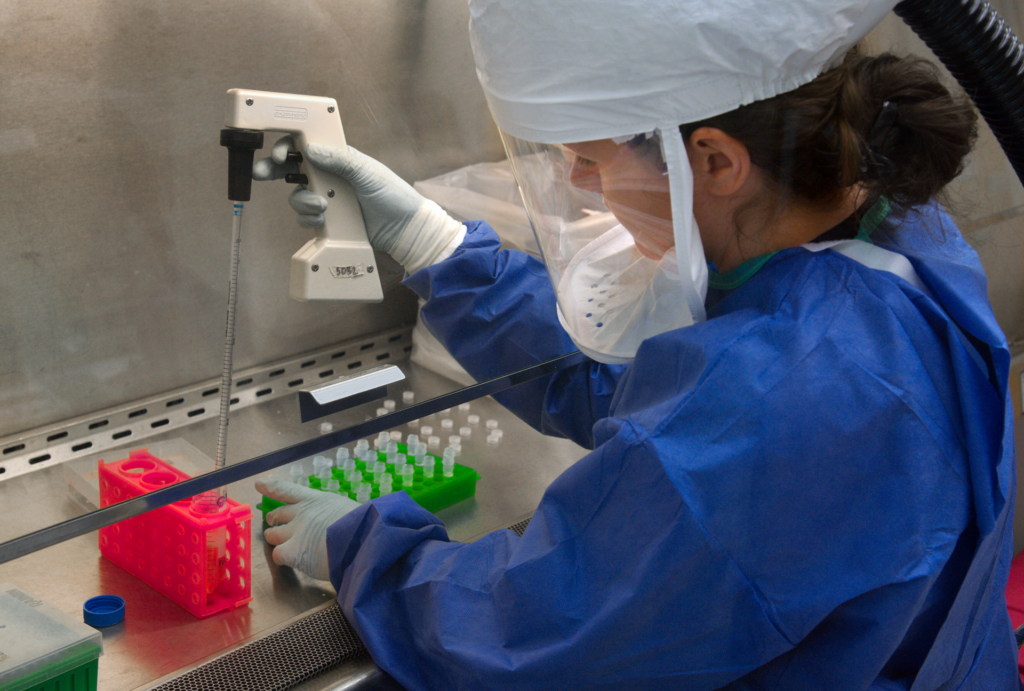
Cleanliness matters: working in a clean area with sterile technique reduces contamination that could compromise results.
For laboratory and research use only. Not for human or veterinary use, consumption, or therapeutic application.